Bedding Guide
How to Choose a Natural Latex Topper for Your Mattress
A latex topper can renew the feel of a bed without replacing the mattress beneath it. Choosing well means looking beyond the word “natural” to consider what the topper is made of, how thick and firm it is, and whether your existing mattress can still provide sound support.
A mattress is a landscape of small decisions made tangible: pressure at the shoulder, room for the hip, a cool or warm surface, a little spring when you turn. When the underlying mattress remains structurally sound but feels too firm, too yielding, or simply less comfortable than it once did, a topper can alter that surface experience. Natural latex is one option for adding cushioning with a responsive, buoyant feel.
But a topper is not a miniature mattress. It cannot rebuild a sagging support core or correct a damaged foundation. Its success depends on the mattress below it, the sleeper above it, and the particular combination of thickness, firmness, and construction. A careful choice begins with a clear diagnosis: what feels wrong, and what kind of change are you hoping to make?
This guide explains how to compare natural latex mattress toppers, how to interpret thickness and firmness, what to look for in material descriptions and certifications, and when a topper is unlikely to solve the problem.
First, decide what you want to change
Before comparing models, spend a few nights noticing how your mattress behaves. Is the surface uncomfortably firm at the shoulders or hips? Do you feel as though you sink too deeply? Does the bed feel uneven, or do you simply want a slightly different sensation? These are different problems, and they call for different responses.
- For a surface that feels too firm: A softer latex topper may add cushioning and reduce the immediate pressure of lying on the mattress.
- For a surface that feels too soft: A firmer topper may change the first impression of the bed, but it cannot restore support if the mattress underneath has lost its shape.
- For a more buoyant feel: Latex typically responds more quickly to movement than slow-conforming memory foam. It may feel springy or resilient rather than enveloping.
- For an uneven or sagging bed: Investigate the mattress and foundation before buying a topper. A new layer may follow the dip rather than remove it.
- For additional cushioning: Compare thickness and firmness together; thickness alone does not tell you whether a topper will feel soft.
Keep the bed frame and foundation in the assessment. A mattress placed on an unsuitable or damaged base may perform differently than intended. Check the mattress maker’s support requirements, including slat spacing and center support, where relevant. The foundation is part of the sleep surface’s structure, even if it is out of sight.
What natural latex feels like
Latex foam is valued for its combination of cushioning and resilience. Under pressure, it compresses; when pressure lifts, it tends to recover quickly. That spring-back can make it easier to change positions than on materials that retain a deeper, slower impression. The exact feel varies with the latex formulation, the way it is made, its firmness, and the topper’s design.
“Natural latex” describes material derived from natural rubber latex, but product descriptions can use terms in ways that require closer inspection. Read the materials list for clarity about whether the foam is natural, blended, or synthetic, and whether the description applies to the entire topper or just one component. A cotton cover, wool layer, or backing may also influence how the topper feels and how it should be cared for.
Latex is not a single, uniform sensation. One topper may feel plush and yielding; another may feel dense and springy. Even a material described as medium can feel different on two mattresses because the layers work together. Treat general firmness labels as a starting point, not a guarantee of how a particular bed will feel.
People with a known latex allergy should consult a qualified healthcare professional and examine the product’s construction and handling guidance before making a purchase. A product description alone may not answer individual medical questions.
Dunlop and Talalay: two common processes
Natural latex toppers are commonly made using Dunlop or Talalay processes. Both can produce latex foam, but their manufacturing methods differ, and the resulting products may vary in feel, density, and construction. The process name can help describe how a topper was made; it does not, by itself, tell you which one is better for a particular sleeper.
Dunlop latex is made by pouring latex into a mold and curing it. Talalay production includes additional steps that create a different structure. In practical shopping terms, avoid relying on a simplified rule that one method is always firmer or always more durable. Product formulations, layer design, and the maker’s specifications matter. Look for a clear description of the latex, the topper’s firmness options, and the intended feel.
Ask whether a topper is made entirely of latex foam or includes other fill materials, and whether its cover is removable. Check whether the manufacturer identifies the latex as natural or blended, and whether those terms are supported by detailed material information. When the wording is vague, a written answer from the maker can be more useful than a broad marketing phrase.
How to choose topper thickness
Thickness determines how much material sits between the sleeper and the mattress, but it does not work alone. A thicker topper may make the surface feel more distinct from the mattress beneath it, while a thinner layer may produce a subtler change. Firmness, body proportions, sleeping position, and the existing mattress all affect the result.
For a modest adjustment, a relatively thin topper may be enough. If you want more noticeable cushioning, you may consider a thicker layer, while remembering that additional depth can also change how much you sink and how easily you move. There is no universal thickness that suits every sleeper or mattress.
| What you want to change | What to consider | A useful caution |
|---|---|---|
| A small adjustment to the surface | A thinner layer may preserve more of the mattress’s original feel. | It may not provide enough change if the mattress feels markedly uncomfortable. |
| More noticeable cushioning | Compare thicker options, checking firmness and material details as well. | More height can alter the bed’s overall feel and fitted-sheet fit. |
| More support for a dipping mattress | Inspect the mattress core and foundation first. | A topper cannot reliably repair a structural sag. |
Measure the mattress and note its current depth before ordering. A topper adds height, so fitted sheets may become too shallow or pull loose at the corners. Check the product’s dimensions and the sheet maker’s pocket-depth guidance. If the topper includes a cover, find out whether its listed dimensions refer to the finished product and whether the cover affects total height.
Consider the bed’s overall height as well. A thick layer may make it harder to get in and out of bed or change the relationship between the mattress and headboard. These practical details are easy to overlook when shopping by material alone.
Choosing firmness for your sleep preferences
Firmness is a description of how a surface feels under a sleeper, not a direct measure of whether it is medically appropriate. Ratings are not perfectly standardized across manufacturers, and a topper’s firmness may be experienced differently depending on the mattress below it. A “soft” layer placed over a firm mattress may feel unlike the same layer placed over a deeply cushioned one.
Sleeping position can help frame the decision, but it should not dictate it. Side sleepers often prefer some surface give around the shoulder and hip; back sleepers may look for cushioning that does not feel unstable; stomach sleepers may want to avoid a deeply yielding surface. Body shape, weight distribution, personal comfort, and the mattress’s support all influence what feels right.
If possible, use a retailer’s return or exchange policy as part of your decision. Read the terms carefully, including any trial period, required use of a protector, return shipping fees, and conditions for eligibility. A few minutes spent checking the policy can matter as much as comparing a firmness label.
Where there is no trial, seek concrete information: firmness options, topper thickness, latex type, cover construction, and the mattress the maker recommends it for. Be cautious of promises that a topper will relieve pain or treat a health condition. Comfort is individual, and a topper is not a substitute for medical advice.
Match the topper to the mattress beneath it
A latex topper and a mattress behave as a system. The mattress provides the main support; the topper changes the contact surface. If the mattress is in good condition and simply feels too firm, adding cushioning may be a reasonable experiment. If it has a pronounced body impression, broken or noisy components, or a visibly uneven surface, a topper may conceal the symptoms without addressing their cause.
Check the mattress warranty before placing another layer on top. Some manufacturers specify how the mattress should be supported or protected, and conditions vary. Also check whether the mattress cover can be used with an added topper and whether any care instructions affect compatibility.
When possible, test a new configuration gradually. Make one change at a time and give yourself a consistent period to notice the difference, rather than changing the topper, pillow, and bed base all at once. Keep notes on whether you feel pressure, excessive sink, heat, or difficulty turning. Observations made in your own bedroom are more informative than a brief impression in a showroom.
Certifications and material claims
Certifications can help verify particular claims, but each program has its own scope. A mark does not automatically mean that a product is entirely natural, organic, chemical-free, or suitable for every person. Read the certification details and confirm which part of the product is covered: latex foam, fabric, fiber, or the finished item.
For example, GOLS is associated with organic latex products and supply-chain requirements. Other certifications may address textile processing, harmful substances, emissions, or manufacturing practices. A certification relevant to a cotton cover does not necessarily certify the latex core, and a material-level certification does not by itself establish durability or comfort.
- Identify the exact material covered by a certification.
- Check whether the claim refers to the latex foam, the cover, or the complete topper.
- Look for clear product specifications rather than relying on broad phrases such as “eco-friendly.”
- Review the manufacturer’s care, warranty, and return information alongside certification claims.
Certifications are one part of an evidence-informed comparison. They can support transparency about materials and production, but they do not tell you whether a topper’s feel will suit your sleep preferences.
Care, ventilation, and longevity
Latex toppers require care suited to their particular construction. Some have removable covers; others are intended to be spot-cleaned only. Follow the maker’s instructions, especially about washing, drying, sunlight, and heat. Do not assume that a removable cover means the foam itself can be washed.
Use a mattress protector if recommended and compatible with the topper. A protector can help guard against spills and everyday soil, but its fabric and fit can change the surface feel. Choose one that accommodates the added height and does not bunch or pull the topper out of place.
Let the bed breathe according to the manufacturer’s guidance, and use a suitable foundation that allows the mattress system to be supported properly. Rotate the topper only if the maker permits it; some designs have a defined top and bottom or are not intended to be flipped. The warranty and care sheet are the best sources for product-specific instructions.
Natural materials are not automatically maintenance-free. Good care can help preserve a topper, but no material is immune to wear. Keep purchase documents, care instructions, and warranty details in an accessible place.
A natural latex topper and other comfort layers
Latex is one of several materials used to alter a bed’s surface. Memory foam is often associated with slower contouring, while latex usually responds more quickly to pressure. Wool-filled toppers offer a different kind of cushioning and temperature management, but they do not provide the same foam-like contour. These are broad distinctions: the actual feel depends on the product’s construction and the mattress beneath it.
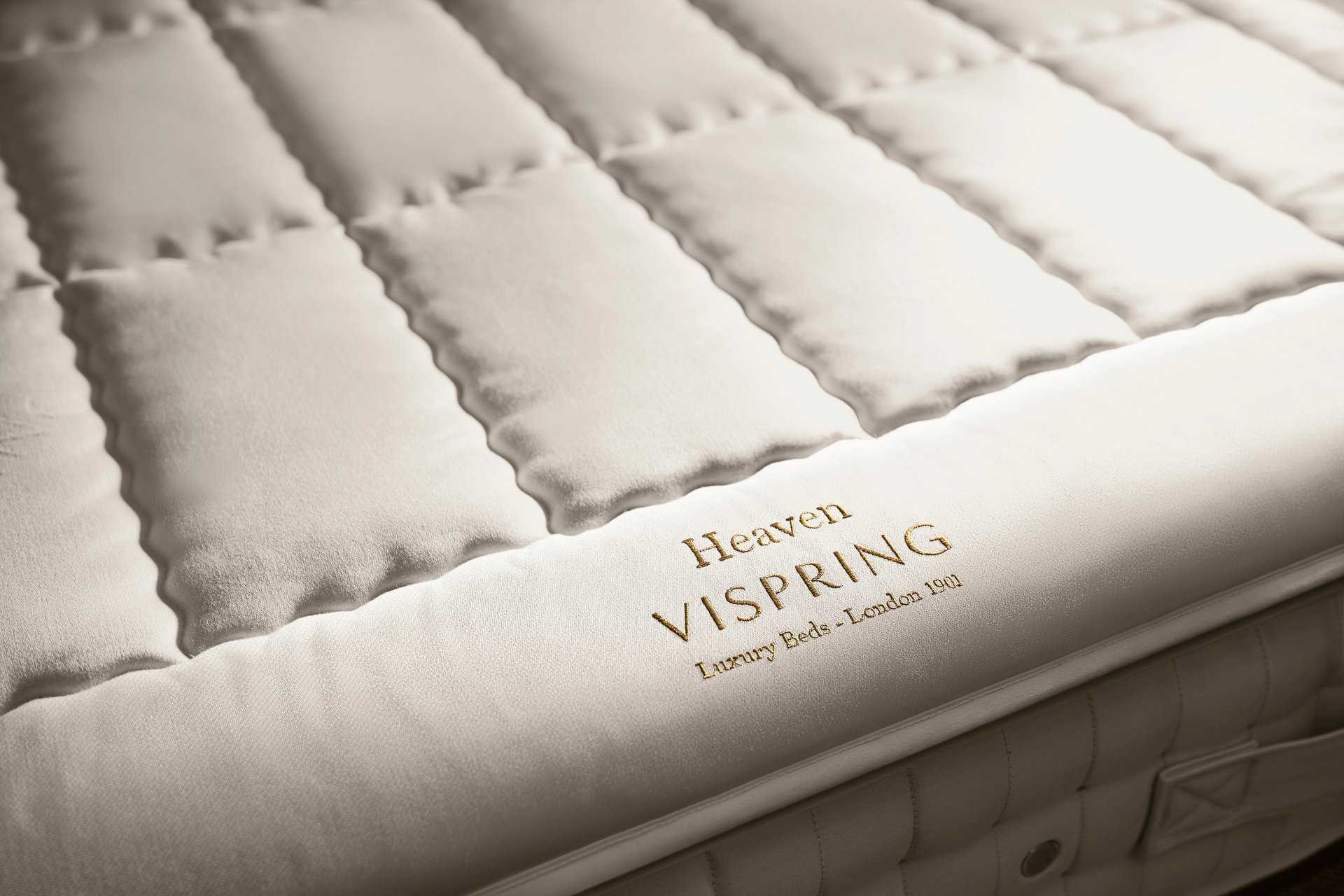
If you are considering a wool option as an alternative, the Vispring Heaven Mattress Topper is described as a two-inch layer filled with British fleece wool and soft-needled British wool. It is not a latex topper, so it should be compared as a different material choice rather than treated as a direct substitute. Its stated construction may appeal to shoppers exploring wool cushioning and temperature regulation.
Before deciding, ask which quality matters most: latex’s responsive rebound, a slow-contouring feel, or a natural-fiber layer. A material label is only the beginning. The right choice is the one that fits the mattress condition, comfort goal, care preferences, and budget.
Common mistakes to avoid
- Buying by thickness alone. A thick topper can still feel firm, and a thin one can noticeably change a surface when its firmness and the mattress are considered together.
- Assuming natural means one specific feel. Latex products vary by process, formulation, firmness, and construction.
- Using a topper to mask structural damage. A sagging or unsupportive mattress may need repair or replacement, not another layer.
- Ignoring sheets and bed height. Added depth can affect fitted-sheet fit and the practical height of the bed.
- Treating certifications as comfort ratings. Certifications can verify defined material or process claims; they cannot predict whether a topper will feel comfortable to you.
- Skipping the care and return terms. Cleaning restrictions and trial conditions can affect the value of a purchase.
A practical checklist before you buy
Use this short list to compare options without losing sight of the bed you already own:
- Describe the specific comfort change you want.
- Confirm that the mattress and foundation are structurally sound.
- Compare thickness and firmness as a pair, not as isolated specifications.
- Check whether the latex is natural, blended, or another formulation, and ask what the product description covers.
- Review the cover material, whether it is removable, and the exact care requirements.
- Measure mattress depth and check fitted-sheet pocket capacity.
- Read certification details, warranty terms, and return or exchange conditions.
- Consider whether the added height and feel will work for everyone sharing the bed.
The right layer begins with the right question
A natural latex mattress topper can make a sound mattress feel more cushioned, more responsive, or simply different. The best choice is not defined by a single thickness, firmness number, or manufacturing label. It comes from matching the topper’s construction to the change you want, while respecting the limits of the mattress beneath it.
Start with the bed’s condition. Then compare latex type, thickness, firmness, certification scope, fit, care, and return terms. This deliberate approach turns a broad search for “more comfort” into a practical decision—and helps ensure that an added layer improves the sleep surface rather than disguising a problem it cannot solve.